

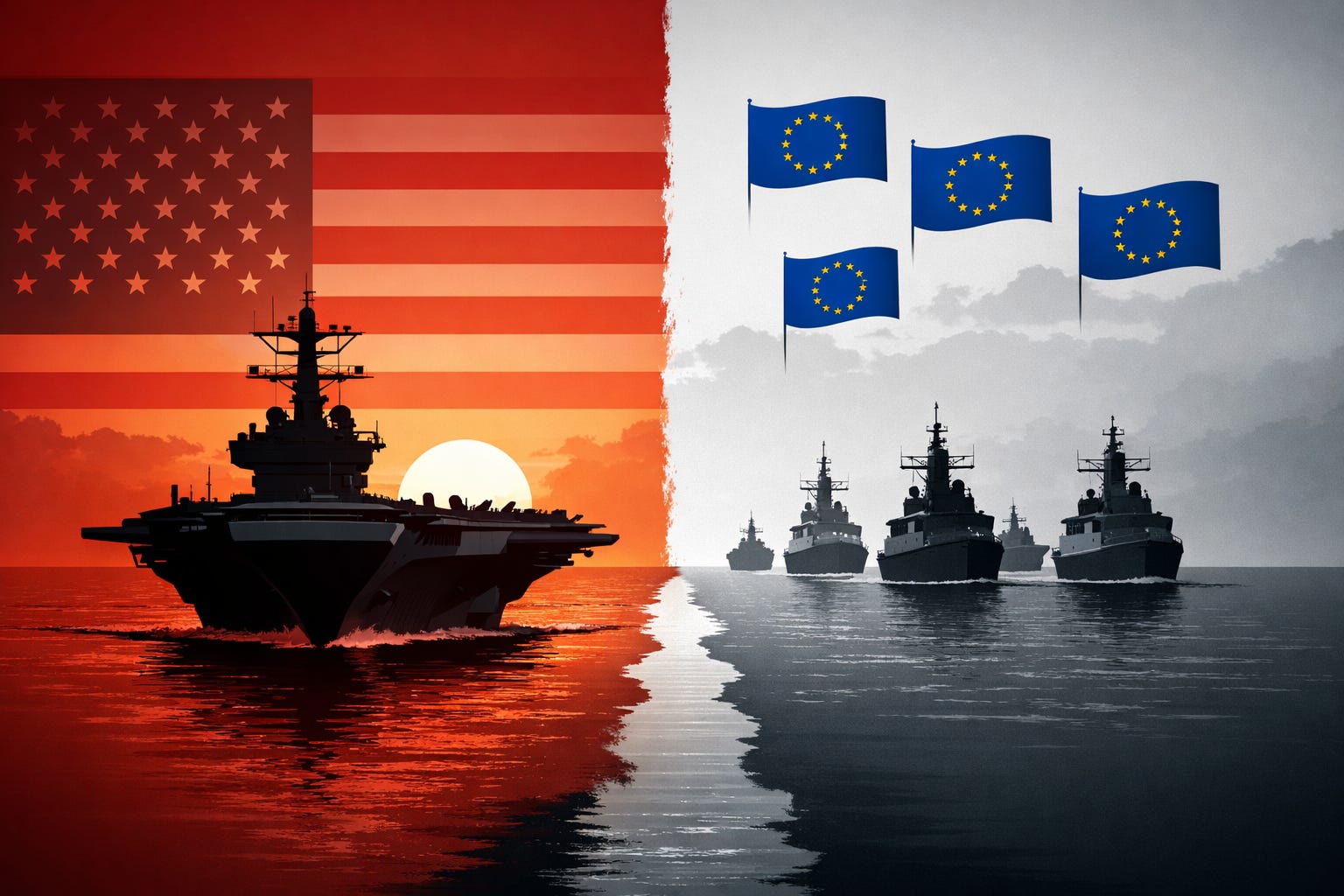
There’s an old rule in international politics.
If your allies refuse to answer the phone when you call… you’ve probably started a war they don’t want.
That’s exactly what just happened.
Donald Trump asked U.S. allies to help secure oil shipments through the Strait of Hormuz after Iran effectively shut down traffic through the waterway.
And the answer from much of the world?
No.
Not maybe.
Not later.
Just… no.
The chokepoint that runs the global oil market
The Strait of Hormuz isn’t some minor shipping lane.
Roughly 20% of the world’s oil exports normally pass through it.
When traffic stops there, the shock ripples through the entire global economy.
Energy prices jump.
Shipping costs spike.
Inflation follows close behind.
Iran’s move to halt traffic sent oil markets into immediate panic mode.
That’s why Washington went looking for help.
But the response from allies has been unusually blunt.
A wall of refusals
Several key countries quickly made their position clear.
United Kingdom: Not interested in joining a wider war
Germany: Flat rejection
Italy: No participation
Australia: No commitment
Japan: No involvement
France: Non-committal but clearly cautious
Even within the European Union, the reaction was close to unanimous.
At a meeting of EU foreign ministers, officials briefly floated the idea of expanding a naval mission currently protecting shipping in the Red Sea.
That proposal was quickly shut down.
Germany led the pushback.
The message was simple…
that mission would not be expanded into the Persian Gulf.
Germany said the quiet part out loud
Germany’s defence minister asked a question that cut straight to the point.
If the massive U.S. Navy can’t secure the Strait of Hormuz… what exactly would a handful of European ships accomplish?
More importantly, Berlin made another thing crystal clear.
Europe did not start this war, and it prefers a diplomatic solution.
That sentiment is being echoed quietly across the continent.
European governments see the current crisis as a conflict Washington triggered — and now wants help managing.
A strategic calculation is happening
There’s another reason Europe is staying out.
Sending even a single naval ship carries a huge risk.
If that ship is attacked, Europe instantly becomes a direct participant in the war.
And that would dramatically widen the conflict.
European leaders are weighing a simple question…
Does sending ships calm the situation… or pour gasoline on it?
Right now, most believe it does the latter.
The inflation nightmare looming ahead
Meanwhile, the economic clock is ticking.
Analysts warn that a prolonged disruption in the Strait of Hormuz could push global inflation far beyond the spikes seen during the pandemic.
Energy costs would surge.
Transportation costs would surge.
And every product tied to energy… which is almost everything… would follow.
European leaders know the pressure will grow.
There’s already talk that they may eventually send symbolic ships just to show political action.
But even that carries risks.
Because symbolic involvement has a habit of becoming real involvement.
The uncomfortable truth
For decades, Western alliances operated on a simple assumption.
If Washington called, allies would show up.
That assumption is now being tested.
The near-universal refusal from Europe signals something bigger than one military decision.
It shows a growing reluctance to be pulled into conflicts that weren’t planned together.
And once that instinct starts spreading through alliances…
it changes the entire geopolitical map.
The Recap…
Trump asked allies to help reopen the Strait of Hormuz.
Europe’s answer was almost unanimous.
No.
When even close allies refuse to join a war, it tells you something big is shifting in the global order.
The Gut-Punch…
When your allies say no, the war suddenly looks a lot more like your own problem.
Source Credit:
Source: European diplomatic reporting and NATO-EU briefings on the Strait of Hormuz crisis.
🔎 The GeezerWise Standard
This space is built on disciplined thinking.
Facts over spin.
Verification before amplification.
Good-faith discussion over tribal noise.
I use AI tools to help shape my spoken drafts into clear writing.
The judgment, conclusions, and final message are mine.
If you’re new here, this explains how I decide what’s worth sharing:
How I Decide What’s Worth Sharing → [link]
💌 Subscribe at GeezerWise.com to receive future letters:
www.geezerwise.com/subscribe
— Fred Ferguson
GeezerWise
#CanadaStrong
It's an illegal war, he wants other countries to illegally join him, so he can point fingers, welllll, all these countries joined in too, why are you punishing ME!!???
Great work Fred.
I totally agree.