

Most people hear “Coca-Cola investment” and think marketing stunt.
This isn’t that.
This is industrial strategy.
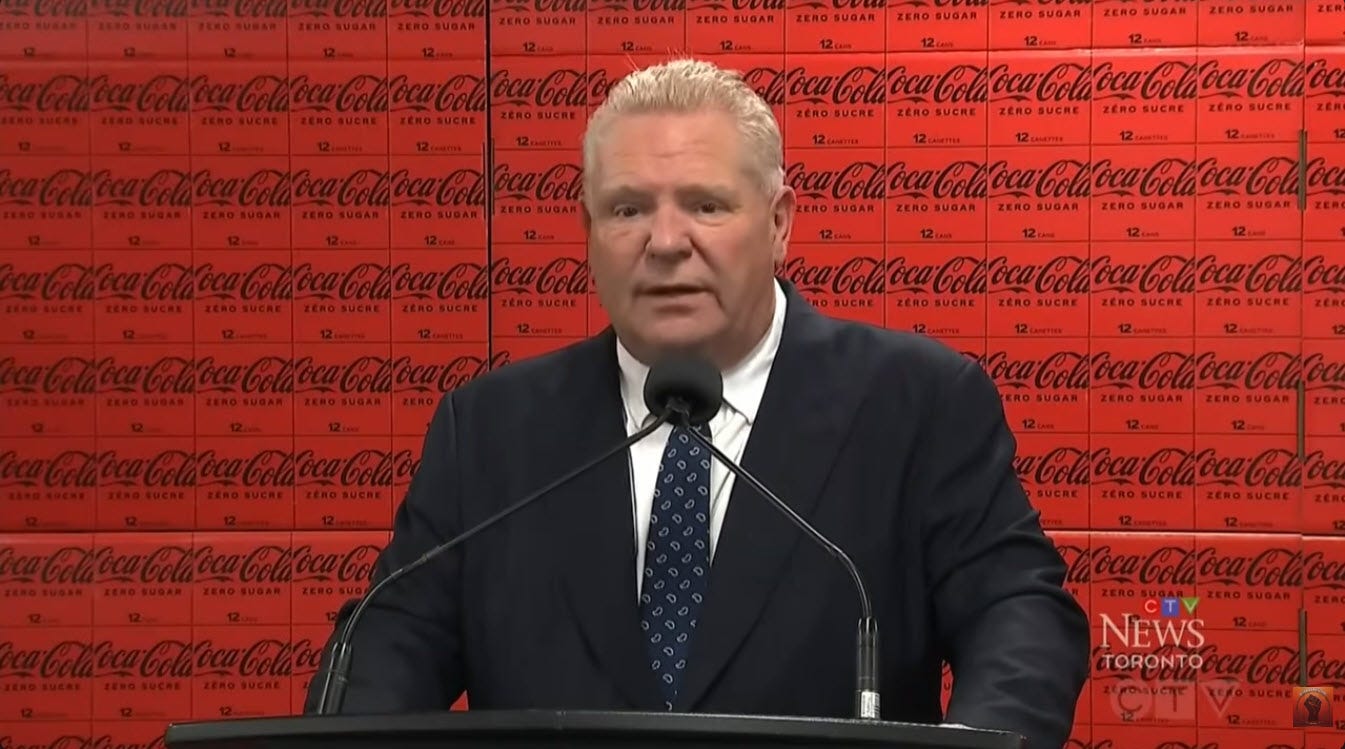
Coke Canada Bottling just announced a $141 million expansion of its production and distribution facility in Brampton, Ontario… the largest single investment in the company’s history.
When the owner of a massive consumer supply network drops nine-figure money into one location, it’s not about selling more pop.
It’s about control.
The project includes a new high-speed, technology-heavy production line that will increase output by roughly 20 million additional cases per year, supplying Ontario and Eastern Canada for decades.
During construction alone, the build is expected to generate about 500 jobs, mostly skilled trades and technical roles.
But the real story sits underneath the headline.
For years, companies chased efficiency by producing far away from consumers and shipping products across long supply chains.
That model worked… until it didn’t. Pandemic disruptions, border slowdowns, fuel volatility, and logistics bottlenecks exposed how fragile those systems were.
Now companies are reversing course.
They want production closer to customers.
They want shorter routes.
They want fewer external dependencies.
This investment is basically supply-chain insurance.
Producing more beverages locally means faster shelf restocking, more stable inventory, lower transport costs, and less vulnerability to disruptions.
If trucking delays hit or cross-border friction spikes, domestic production keeps flowing.
In today’s geopolitical climate, that matters.
Another piece people miss: Coke Canada Bottling operates as an independent Canadian company, not the U.S. parent corporation.
That means this capital decision reflects confidence from within Canada’s own bottling system… local leadership betting on Canadian demand, infrastructure, and workforce.
That’s a meaningful signal.
Large manufacturing investments don’t happen casually during periods of inflation pressure, trade uncertainty, and shifting consumer behavior.
Companies run projections for years before committing this kind of money. When they do move, they’re effectively saying:
“We believe this market is stable enough to anchor long-term production here.”
Automation is also central to the expansion. Modern bottling lines integrate robotics, predictive maintenance systems, digital quality monitoring, and flexible packaging capabilities.
That reduces manual tasks but increases demand for technical operators, engineers, and systems specialists.
Manufacturing isn’t disappearing.
It’s evolving.
Facilities like this also create ripple effects… packaging suppliers, trucking firms, maintenance contractors, warehouse operators… forming an industrial ecosystem around the plant.
One large anchor investment strengthens an entire regional corridor.
And there’s a competitive angle too.
The beverage market isn’t just cola anymore. It’s energy drinks, bottled water, sports beverages, zero-sugar variants, and specialty products.
Local production capacity allows faster response to seasonal demand spikes and market shifts without relying on imports.
Speed equals advantage.
Government leaders framed the announcement as a win for Ontario workers and domestic supply chains, and they’re not wrong.
Investments like this reinforce manufacturing capacity inside Canada at a time when countries everywhere are trying to reduce dependence on external production.
Here’s the bottom line.
This isn’t about soft drinks.
It’s about resilience.
It’s about proximity.
It’s about companies quietly reorganizing how North American manufacturing works.
When a major operator invests $141 million into one Canadian facility, they’re not just betting on beverages.
They’re betting on Canada.
The Recap…
Coca-Cola just dropped $141 million into a Canadian plant.
That’s not a soda story… it’s a supply-chain story.
Companies are moving production closer to home, and Canada is starting to benefit.
Something bigger is shifting behind the scenes.
The Gut Punch…
“When companies spend nine figures locally, they’re not chasing trends — they’re preparing for the next disruption.”
Source Credit:
Source: Public announcement and industry reporting on Coke Canada Bottling’s Brampton expansion.
🔎 The GeezerWise Standard
This space is built on disciplined thinking.
Facts over spin.
Verification before amplification.
Good-faith discussion over tribal noise.
I use AI tools to help shape my spoken drafts into clear writing.
The judgment, conclusions, and final message are mine.
If you’re new here, this explains how I decide what’s worth sharing:
How I Decide What’s Worth Sharing → [link]
💌 Subscribe at GeezerWise.com to receive future letters:
www.geezerwise.com/subscribe
— Fred Ferguson
GeezerWise
#CanadaStrong
How much water will they use and pollute. Where will they get this water. The Great Lakes are one of the largest fresh water lakes in the world. If Coke, Pepsi and AI centers are all drawing from the Great Lakes how long before they are extinct??? What does that due for human and wildlife consumption??? How about the plastic throw away?? Will these Co. be responsible for bottle clean up???
I also think it’s strategic due to our access to water. Hope they will pay fairly for this. Region of Peel, which includes Brampton, charges its residents for water and sewer usage.