

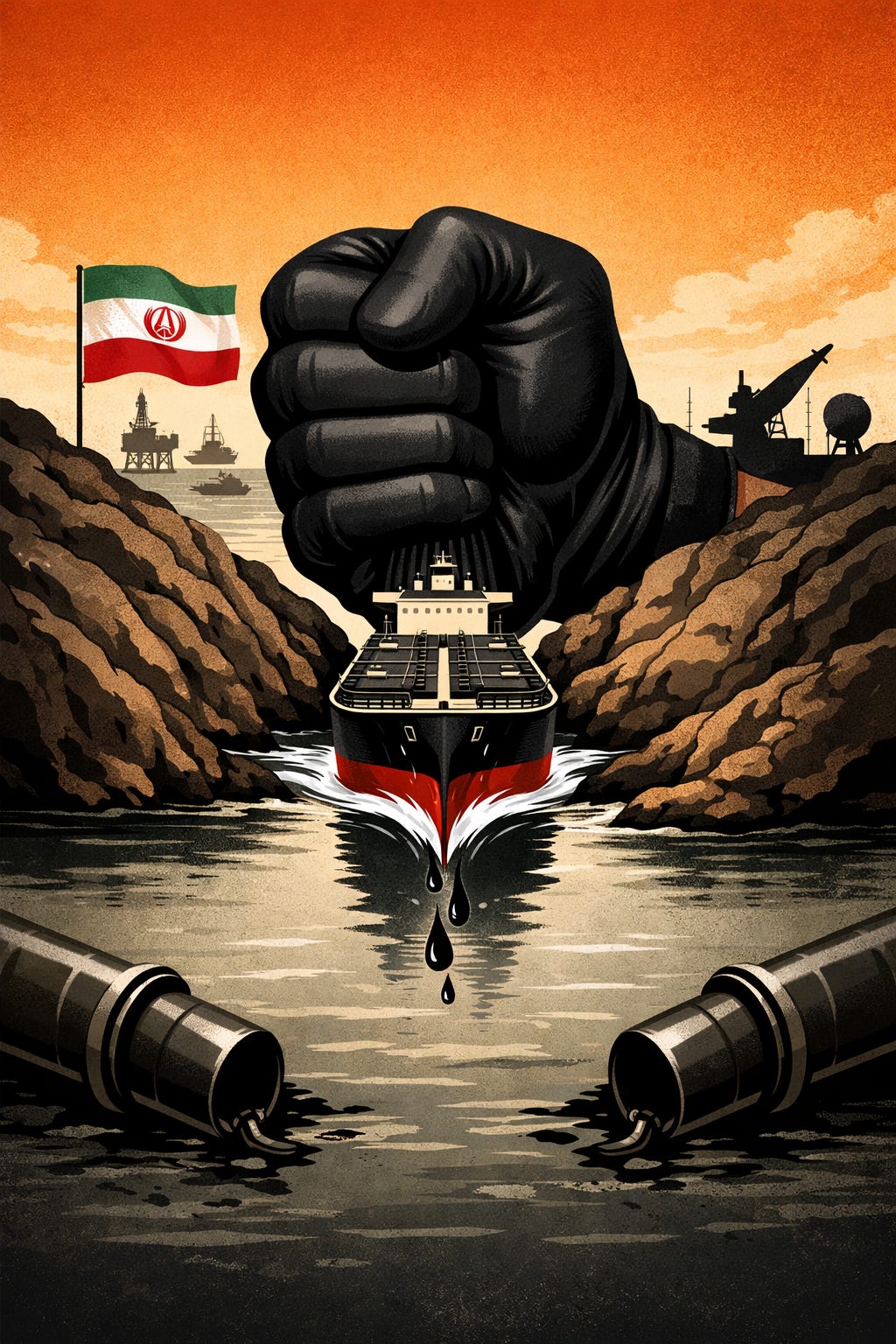
There’s a special kind of stupidity that shows up…. when a guy mistakes brute force for understanding.
That’s where this Iran mess is sitting right now.
Trump and Netanyahu appear to have bet on the same fantasy… hit the top layer hard enough, fast enough, and the whole Iranian regime folds like a cheap lawn chair.
That was the theory. Cut the head off, watch the body collapse, declare victory, strut to the microphones.
Problem is, Iran is not some flimsy pop-up dictatorship held together with duct tape and fear alone.
It’s a 47-year-old ideological state with deep internal layers, armed enforcers, embedded networks, and a long record of absorbing punishment without surrendering.
You don’t have to admire that regime to understand it. You just have to not be an idiot.
And that seems to be the missing ingredient.
The early strikes were clearly meant to shock the system. The hope was that killing off senior leadership would trigger a wider unraveling.
Instead, the opposite seems to be happening… the regime is hardening, not crumbling.
That should not have surprised anybody who has spent more than ten minutes studying Iran instead of cable-news graphics.
The bigger blunder is this…
Even if Iran can’t beat the United States or Israel in a straight military contest, it still has ways to hit where it hurts.
And where it hurts most for Trump is not philosophy, history, or international law. It’s markets. It’s oil. It’s headlines. It’s the price people see at the pump and the grocery store.
That’s where the Strait of Hormuz comes in.
Roughly 20 percent of the world’s oil supply moves through that choke point. Iran doesn’t need to win a grand military showdown to cause damage.
It just needs to jam the gears of the global economy long enough to make everybody else feel the pain.
That pressure hits fast, and it lands right in the lap of a president who measures success partly by stock prices and consumer mood.
So now the same guy who spent months insulting allies is asking them to help clean up the spill.
That’s rich.
He spent the last year and a half treating allies like dead weight, freeloaders, and punching bags.
Now he wants some kind of coalition to help reopen Hormuz and stabilize the fallout.
NATO countries didn’t start this war. Asian partners didn’t start this war. China sure as hell didn’t start this war.
Yet Washington is making calls like the drunk guy at 2 a.m. who suddenly remembers he has friends.
Funny how “we don’t need you” turns into “where the hell are you?” when the fire spreads.
And that’s only one part of the story.
The other part is the collapse of expertise.
Trump has spent years treating experience, regional knowledge, and policy depth like they’re signs of weakness.
He trusts instinct over analysis, swagger over planning, and vibes over history.
That may work in branding. It does not work in a war zone.
You cannot “feel in your bones” your way through a conflict like this.
Iran is not a real-estate negotiation. It is not a TV segment. It is not a tough-guy montage with jets, explosions, and applause lines.
It is an ancient, complicated, heavily layered regime shaped by ideology, repression, internal factions, regional ambitions, and long memory.
You don’t solve that with a shopping-mall mindset and a Fox News temperament.
And that gap shows up everywhere.
The administration reportedly expected pressure and initial strikes to force capitulation.
That alone tells you they didn’t understand the regime they were dealing with.
Iran’s rulers may be brutal, paranoid, and dangerous, but they are not known for folding under pressure.
If anything, pressure validates the worldview they sell at home.
That makes this even more dangerous for ordinary Iranians.
Western leaders love to talk as if “the people” are waiting for the right nudge to rise up and finish the job.
That sounds heroic from a studio chair.
It sounds a lot less heroic when you remember those same people have already been gunned down in the streets before, had communications cut, and watched the world move on.
It’s easy to say “your country is yours now” when you’re not the one facing armed regime thugs with actual guns.
What exactly are civilians supposed to do? March into live fire with hope and slogans?
That’s not strategy. That’s outsourcing the blood.
And when these campaigns drag on, civilians always end up paying the heaviest price. Fuel depots get hit. Infrastructure gets damaged.
Water systems get contaminated. Communications get cut.
Panic spreads through cities full of people who didn’t ask to become pieces on somebody else’s chessboard.
This is the part war salesmen always leave out.
They sell the strike. They don’t sell the aftermath.
Iraq should have burned that lesson into everybody’s skull by now. Instead, here we are again. Quick military success gets mistaken for political success.
Then comes the vacuum, the improvising, the arrogance, the fantasy that toppling one layer automatically gives you control of what comes next.
It doesn’t.
Sometimes the regime survives.
Sometimes the country fractures.
Sometimes the aftermath breeds something worse.
Sometimes all three.
And if this war teaches Iran’s leadership anything, it may be the one lesson Washington never seems to learn…
If you don’t already have a nuclear deterrent, get one.
That is the sick irony in all this. If Iran concludes that survival depends on building a bomb, this war may end up speeding up the very thing it was supposedly meant to prevent.
Brilliant work, fellas.
Then there’s the propaganda side of this circus.
The language coming out of Washington has been reckless, macho, and grotesque.
Too much of it sounds like a video game trailer written by men who think war is content. Whole populations get lumped together with their rulers.
Civilian suffering gets buried under action-movie swagger. Biblical chest-thumping and casual talk about ignoring rules of engagement do not project strength.
They project rot.
Even worse, when the facts turn ugly, the administration appears more interested in attacking reporters than confronting reality.
That’s the part people should be watching like hawks.
When governments start blaming journalists for making them “look bad,” what they’re really saying is: stop describing what we did.
That is classic authoritarian reflex.
Don’t fix the failure. Smother the witness.
And Trump, as usual, understands media weakness better than the media understands him.
He knows the cycle moves fast.
He knows attention splinters.
He knows a new outrage can bury an old one.
He knows that if one story sticks, he can throw another shiny object into the road and half the country will chase it.
That trick works best when pain is abstract.
It works less well when oil spikes.
When shipping is disrupted.
When groceries climb.
When the fallout shows up in the everyday lives of people who don’t follow geopolitics but sure as hell notice inflation.
Reality is a tougher publicist than cable TV.
That may be why this one feels different.
Not because the spin machine has stopped.
Because the consequences are getting harder to hide.
And that leaves Trump in a familiar bind…
A mess he helped make, a story he can’t fully control, allies he insulted, experts he sidelined, and a press he needs right up until the moment it tells the truth.
Strong-man politics always looks impressive in the trailer.
Then the full movie starts, and you realize the hero never read the script.
The Recap…
Trump sold the Iran war like it would be quick, clean, and controlled.
Instead, oil routes are under threat, allies are being asked to rescue a mess they didn’t start, and the White House is already snapping at reporters for noticing reality.
This is what happens when swagger replaces strategy.
The Gut-Punch…
When a president treats war like a toy, ordinary people become the batteries.
Source Credit:
Based on a Christiane Amanpour interview with Tina Brown discussing the Iran war, media pressure, allied backlash, and the political fallout.
🔎 The GeezerWise Standard
This space is built on disciplined thinking.
Facts over spin.
Verification before amplification.
Good-faith discussion over tribal noise.
I use AI tools to help shape my spoken drafts into clear writing.
The judgment, conclusions, and final message are mine.
If you’re new here, this explains how I decide what’s worth sharing:
How I Decide What’s Worth Sharing → [link]
💌 Subscribe at GeezerWise.com to receive future letters:
www.geezerwise.com/subscribe
— Fred Ferguson
GeezerWise
#GeezerWise #GeezerWiseSays
Great reporting there Fred. I love Christiane Amanpour, she simply tells it like it is, always factual & not timid about speaking up, on any subject!
I think the first sentence is the recap should read "Trump WAS sold the war would...." because he sure as hell didn't sell it to the American public.