

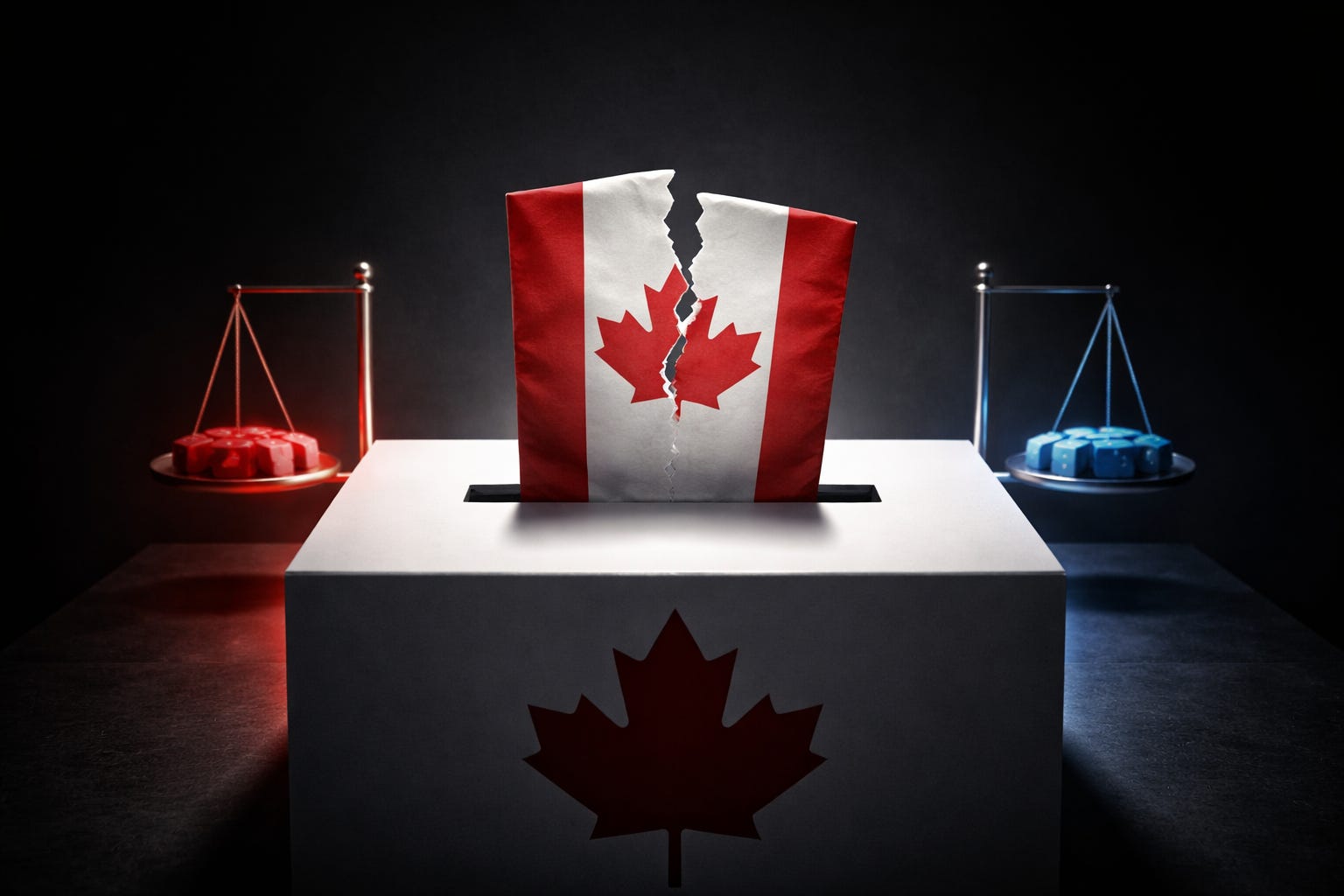
Let’s not kid ourselves…
Whenever you hear the phrase “electoral reform” suddenly popping up in headlines, it’s never just about improving democracy.
It’s about changing how power is earned.
And right now in Canada, that conversation is heating up again — quietly in some corners, loudly in others — and most people aren’t quite sure what’s actually being proposed.
So let’s slow this down and unpack it.
Because there’s more going on here than the surface-level chatter.
First… What Is This “Electoral Reform Group” Actually Talking About?
At its core, most electoral reform efforts in Canada tend to circle around a few familiar ideas:
1. Proportional Representation (PR)
Instead of “winner takes all” in each riding, seats in Parliament would reflect the overall vote share.
Example…
Party gets 30% of the vote → gets ~30% of the seats
Sounds fair, right?
But it also means…
More coalition governments
Smaller parties gaining influence
Less clear “winner” outcomes
2. Ranked Ballots
You don’t just pick one candidate… you rank them.
If your first choice doesn’t win, your vote transfers to your second choice.
The pitch…
“More consensus-driven results”
The reality:
More complex counting
Different strategic behavior from voters
Outcomes that feel less direct
3. Mixed Systems
A blend of local representatives + proportional seats.
This is where things get… technical.
And when things get technical, trust becomes fragile.
Now Here’s the Real Question… Why Now?
This is where things get interesting.
Because timing matters more than theory.
Right now, Canada is dealing with…
Global instability
Economic uncertainty
Rising political polarization
A flood of misinformation (some of it imported, some homegrown)
And into that environment… we introduce a conversation about changing the rules of the game.
Even if the intentions are good…
The perception risk is huge.
This Is Where It Gets Dangerous (If Mishandled)
You don’t need to be a conspiracy theorist to see the problem.
You just need to understand how narratives spread.
If electoral reform is pushed without clarity, here’s what happens…
People don’t understand the changes
That confusion gets filled with speculation
Speculation gets weaponized
And suddenly… trust takes a hit
And yes…
That’s exactly the kind of opening bad actors… domestic or foreign… love.
And Joanna’s Point? Dead On.
“Is NOW the time to stress test the Canadian electoral system?”
That’s not a casual question.
That’s the whole ballgame.
Because there are two very different ways to approach reform…
Option A: Calm, stable environment
Clear communication
Public education
Broad consensus
Trust is high
Option B: Volatile environment (what we have now)
Mixed messaging
Emotional reactions
External narratives jumping in
Trust gets shaky
Same reform.
Very different outcome.
Let’s Talk About the “Trumpers Having a Field Day” Concern
That’s not fear-mongering… that’s pattern recognition.
We’ve already seen how quickly narratives can cross borders.
All it takes is…
A confusing headline
A clipped video
A misleading post
And suddenly…
“Canada is rigging elections”
“Democracy is being rewritten”
“This is how it starts…”
None of that has to be true.
It just has to be believable enough to spread.
So Where Does That Leave Us?
Here’s the grounded take… no drama, no spin:
Electoral reform is not inherently bad
Some ideas are genuinely worth exploring
The current system isn’t perfect (no system is)
But…
Timing + transparency + trust = everything
And right now?
We’re in a moment where…
Trust is already under pressure
Information is messy
Narratives move faster than facts
That’s not the ideal environment to introduce complexity into the core system people rely on to feel represented.
The Real Risk Isn’t the Reform… It’s the Confusion
If this conversation is going to happen, it needs…
Plain language explanations (not academic jargon)
Honest trade-offs (not sales pitches)
Public buy-in (not top-down rollout)
Because the second people feel like they don’t understand what’s changing…
They stop trusting the outcome.
Bottom Line
This isn’t just about how votes are counted.
It’s about whether people believe the system still reflects them.
And that belief?
Once it cracks… it’s a long road back.
The Recap…
They’re calling it “electoral reform”…
but most people don’t actually know what’s being proposed.
And the timing? That’s the real issue.
This isn’t just about changing the system…
it’s about whether people still trust it.
The full breakdown is here.
Source Credit:
Inspired by reader question from Joanna Crandell and current public discussion around electoral reform in Canada.
🔎 The GeezerWise Standard
This space is built on disciplined thinking.
Facts over spin.
Verification before amplification.
Good-faith discussion over tribal noise.
I use AI tools to help shape my spoken drafts into clear writing.
The judgment, conclusions, and final message are mine.
If you’re new here, this explains how I decide what’s worth sharing:
How I Decide What’s Worth Sharing → [link]
💌 Subscribe at GeezerWise.com to receive future letters:
www.geezerwise.com/subscribe
— Fred Ferguson
GeezerWise
#CanadaStrong
Non merci! No thanks! Lo siento pero no!
I’d like to see us move to a Scandinavian style of proportional representation. It’s obviously worked well for them as they always rank as the most prosperous, happy, safe and corruption free countries in the world. In Canada it would guarantee that no party receives a majority, forcing everyone to work together. It would also give more voice to smaller national parties such as the NDP & Greens which are both severely underrepresented while taking power away from regional parties such as the Bloc whose sway over our politics is far too disproportional.