

There’s a difference between strategy and scrambling.
Right now, the United States looks like it’s scrambling.
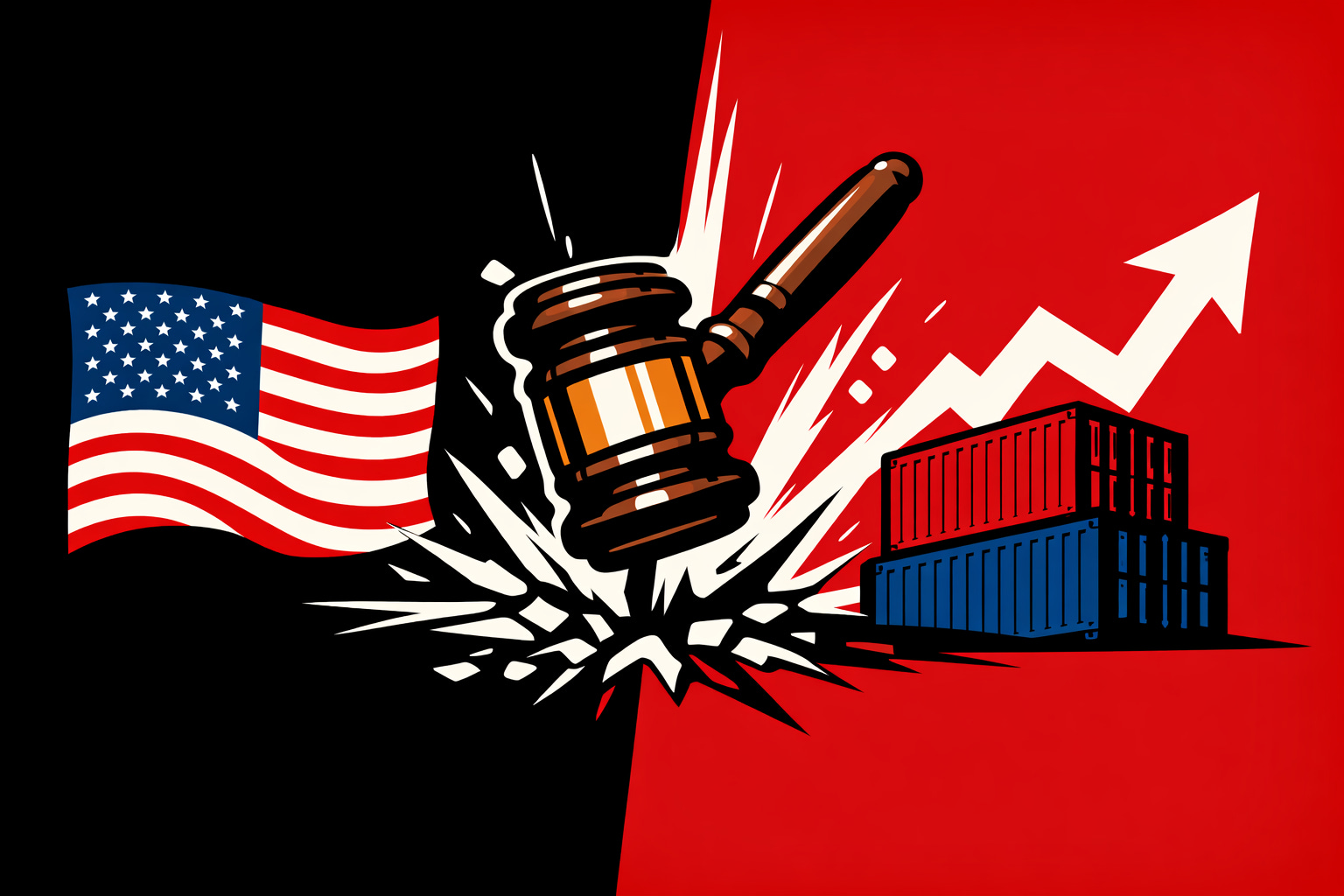
Within 24 hours of the U.S. Supreme Court ruling that Trump’s earlier tariffs were illegal, a replacement global tariff appeared… first 10%, then suddenly 15%.
That’s not policy evolution.
That’s policy whiplash.
The Trigger: A Supreme Court Smackdown
On February 20, the Supreme Court ruled 6–3 that tariffs imposed under the International Emergency Economic Powers Act… were unlawful.
The law allows emergency powers for national security threats… not trade policy.
Those now-invalid tariffs had already generated more than $130 billion in revenue.
So overnight, the administration had a fiscal problem.
The response? A new global tariff under Section 122 of the Trade Act… a tool meant to be temporary, capped at 150 days without congressional approval.
Then, before businesses could even react, the rate jumped from 10% to 15%.
Why the Sudden Increase?
Money.
At 10%, tariffs on roughly $3.2 trillion of imports could produce about $300–350 billion annually.
At 15%, that climbs toward $450–500 billion… roughly $150 billion more.
But there’s a catch.
Imports don’t stay constant when tariffs rise. Higher costs reduce trade volumes, forcing governments to keep increasing rates to chase the same revenue.
That’s how tariff spirals start.
History already showed this during the 1930 Smoot-Hawley era.
We know how that ended.
Who Actually Pays?
Not foreign countries.
It is American companies that pay the tariffs when goods enter the U.S.
Research has consistently found the costs land on U.S. importers and consumers through higher prices or reduced profits.
Which means…
• Businesses eat the margin
• Consumers eat the inflation
• Hiring and investment slow down
That was already happening before the jump to 15%.
Operational Chaos for Companies
Imagine running a supply chain today.
You price products for 10%.
Renegotiate contracts.
Update systems.
Then… 24 hours later… it’s 15%.
Do it all again.
This isn’t theoretical. Trade groups report companies freezing hiring and borrowing money just to absorb tariff costs.
Uncertainty is poison to business planning.
Allies Are Losing Patience
Europe called emergency meetings after the initial announcement.
Canada warned businesses to prepare for disruption.
The EU already has $93 billion in retaliatory tariffs ready if escalation continues.
China has been shifting supply chains away from the U.S. for months, reducing American dependence in its import mix.
When trade rules change daily, negotiation stops.
Countries move to defense mode instead.
Layered Tariffs = Bureaucratic Nightmare
The new tariffs don’t exist alone.
Some products already face…
• Section 232 national security tariffs
• Section 301 tariffs on China
• Now Section 122 tariffs on top
Different rules, different exemptions, overlapping authorities.
Even U.S. customs agencies have to figure it out in real time.
That’s not leverage.
That’s confusion.
The Bigger Pattern
Here’s the real signal.
The administration isn’t executing a long-term trade strategy.
It’s reacting to short-term revenue loss after the court ruling.
And that matters.
Because when governments start chasing money instead of following policy logic, credibility collapses.
Markets hate unpredictability.
Investors hate unpredictability.
Allies hate unpredictability.
The Clock Is Ticking
Section 122 tariffs expire after 150 days without congressional approval.
That deadline lands around late summer.
If Congress refuses to extend them, the administration will likely hunt for another legal pathway… investigations, national-security claims, or new mechanisms entirely.
Which means more volatility ahead.
The Real Risk
Tariffs don’t fix trade deficits.
Trade balances come from macroeconomics… savings rates, currency values, investment flows.
Tariffs mostly shift prices and provoke retaliation.
If escalation continues, the world moves toward tit-for-tat trade barriers.
And once that cycle starts, nobody wins.
Not even the country that started it.
The Recap…
The Supreme Court said Trump’s tariffs were illegal.
So within 24 hours… he replaced them.
Then raised them to 15%.
This isn’t strategy anymore… it’s policy chaos.
New piece just dropped.
The Gut Punch…
When policy changes faster than businesses can adapt, the policy isn’t working.
Source Credit:
Source: Economic and policy analysis based on reporting and data discussed by House of EL (YouTube).
🔎 The GeezerWise Standard
This space is built on disciplined thinking.
Facts over spin.
Verification before amplification.
Good-faith discussion over tribal noise.
I use AI tools to help shape my spoken drafts into clear writing.
The judgment, conclusions, and final message are mine.
If you’re new here, this explains how I decide what’s worth sharing:
How I Decide What’s Worth Sharing → [link]
💌 Subscribe at GeezerWise.com to receive future letters:
www.geezerwise.com/subscribe
— Fred Ferguson
GeezerWise
Businesses are going to be really pissed off with this, but Trump never could run a business, that’s why we are all looking elsewhere, can’t cope with this taco, rogue unqualified person
It’s the truest doing definition of madness: Doing something over and over again hoping for a different result