

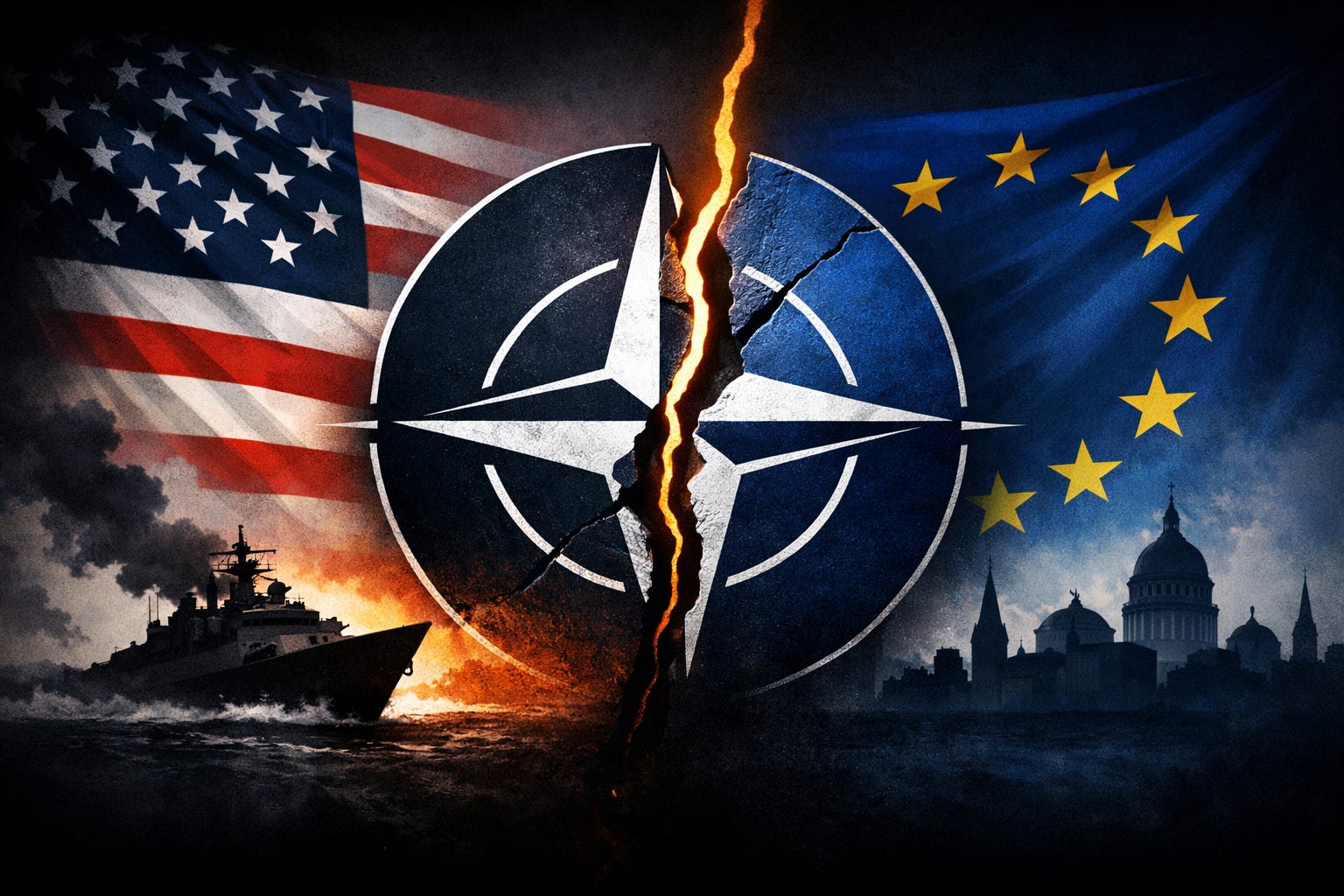
There’s a quiet rule in politics…
If everyone’s nodding publicly but saying different things privately…
you don’t have unity… you have theatre.
And right now, NATO is putting on a hell of a show.
The Secretary-General stepped out and suggested Europe would eventually line up behind the U.S. in a military move tied to Iran… specifically around securing the Strait of Hormuz.
Problem is…
Europe already said no.
Not quietly.
Not diplomatically buried.
Flat out no.
Germany, France, Italy, Spain… along with the EU’s top diplomat… all made it clear:
👉 This is not our war.
👉 We were not consulted.
👉 We’re not sending people into it.
That’s not hesitation.
That’s a line in the sand.
The Real Problem Isn’t the War… It’s the Disconnect
Now here’s where it gets interesting.
NATO doesn’t run like a CEO-led company.
It runs on consensus.
Meaning the Secretary-General is supposed to reflect what members agree on… not freelance policy.
But that’s exactly what just happened.
He spoke as if Europe would eventually fall in line…
while European leaders were publicly saying the opposite.
That’s not strategy.
That’s a credibility gap you could drive a convoy through.
Behind the scenes, diplomats are reportedly uneasy — not because they want to attack the U.S. position, but because they don’t agree with it either.
One summed it up bluntly…
👉 “We want to show willingness… but we’re not in a position to get involved.”
That’s diplomatic language for…
👉 “Don’t drag us into this.”
Europe’s Calculation Is Cold… Not Emotional
European leaders aren’t reacting out of fear.
They’re calculating risk.
And the math doesn’t work.
• They weren’t consulted before the conflict started
• They don’t fully understand the long-term objective
• Their populations don’t support it
• And they’d absorb economic fallout either way
Oil prices spike? Europe pays.
Supply chains get hit? Europe pays.
Conflict escalates? Europe pays.
But they didn’t make the call.
That’s the part that stings.
Meanwhile… Washington’s Approach Isn’t Helping
Instead of diplomacy, the tone coming out of the U.S. has been… let’s call it blunt.
Allies criticized for not joining.
Warnings about NATO being weak without U.S. backing.
Pressure layered on top of recent tariff threats.
That’s not how you rally partners.
That’s how you remind them they have options.
And Europe is starting to think like it.
Even the UK Is Pumping the Brakes
Public opinion in Britain is leaning against involvement.
And leadership isn’t rushing in either.
The message is cautious…
👉 No troops without a clear plan
👉 No automatic participation in escalation
That’s not defiance.
That’s distance.
Here’s the Key Shift Most People Miss
Europe isn’t saying…
👉 “We’ll never help.”
They’re saying…
👉 “We’re not joining this… not like this.”
There’s a difference.
Some countries have hinted they might help protect shipping lanes after things cool down.
That’s defensive.
What’s being asked right now is offensive alignment.
And those are two very different commitments.
So What’s Really Going On?
Strip away the headlines and you get this…
👉 The U.S. moved fast
👉 Europe wasn’t consulted
👉 NATO leadership tried to smooth it over
👉 But the gap is too big to hide
Now you’ve got…
• Europe questioning the process
• The U.S. questioning loyalty
• NATO leadership stuck in the middle
That’s not cohesion.
That’s strain.
What Happens Next Matters More Than What Just Happened
There are three pressure points to watch…
Do European countries actually deploy forces?
If they don’t, the “they’ll come around” narrative collapses.Do leaders push back publicly?
If frustration spills into open criticism, this gets messy fast.Does the U.S. escalate pressure on NATO itself?
Because once trust erodes, alliances don’t break overnight —
they drift apart until they stop functioning.
Bottom Line
You can’t run a military alliance on assumptions.
And you definitely can’t run it when…
👉 One side starts a war
👉 The other side disagrees
👉 And leadership pretends they’re still aligned
At that point…
You don’t have a united front.
You’ve got a group project where nobody agrees on the assignment.
The Recap…
NATO just showed its first real crack.
Europe said “not our war.”
Washington said “you should be in.”
And the guy in the middle tried to pretend both sides agreed.
That’s not unity. That’s drift.
The Gut- Punch…
When your alliance needs interpretation instead of agreement… it’s already breaking.
Source Credit:
Based on House of El geopolitical analysis and reported statements from European officials and NATO leadership.
🔎 The GeezerWise Standard
This space is built on disciplined thinking.
Facts over spin.
Verification before amplification.
Good-faith discussion over tribal noise.
I use AI tools to help shape my spoken drafts into clear writing.
The judgment, conclusions, and final message are mine.
If you’re new here, this explains how I decide what’s worth sharing:
How I Decide What’s Worth Sharing → [link]
💌 Subscribe at GeezerWise.com to receive future letters:
www.geezerwise.com/subscribe
— Fred Ferguson
GeezerWise
#CanadaStrong
Maybe I'm missing something here. I thought NATO was a defense organization where members pledged to defend each other if attacked. The U.S. is a member but the U.S. wasn't attacked; it is, in fact, the aggressor. NATO is not refuting its mandate, the U.S. is making a request outside the principals of the organization.
If Trump and the U.S. need help, then his requests should go to individual states or countries. If they choose to help they should have lots of strings attached. The rescinding of tariffs for one, with a treaty to never impose them again. I would suggest Trump needs to resign before I would help. This has nothing to do with NATO.
In any given situation you have weak and strong leaders for different sides. It often happens that one side, now under weak leadership, will then get strong leadership and so on. It is terrible if both sides have weak leadership at the same time, but can be beneficial if both sides have strong leadership, at the same time. With regards to NATO, it has very weak leadership in the form of Mark Rutte. He comes across as a groveling, sniffling underling, who asks "How high" when Trump says "Jump". Much worse than Keir Starmer, Rutte projects the image of one who is spineless, who will cave at the least bit of inconvenience.