

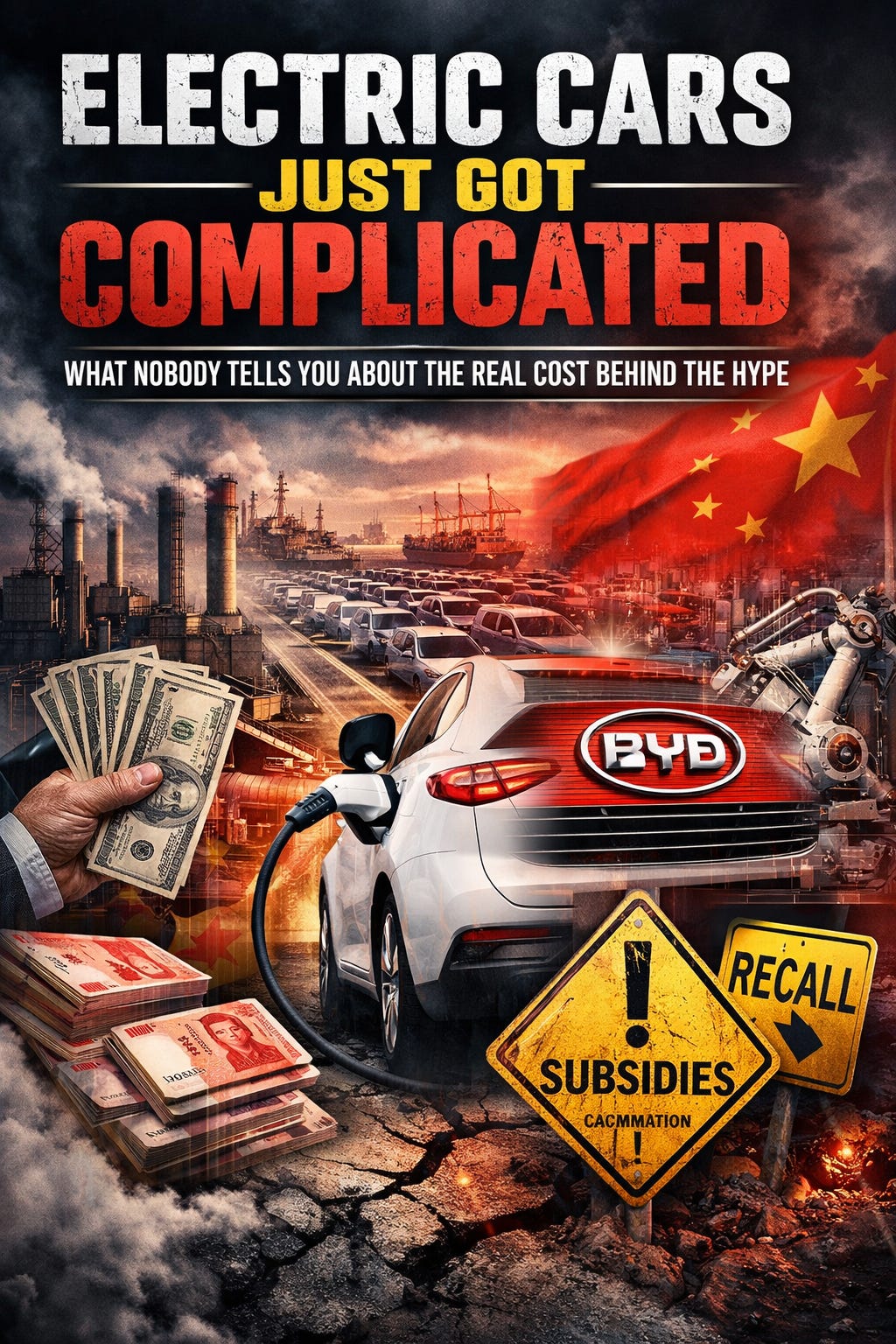
For decades, the auto industry had a clear pecking order.
Germany built precision.
Japan built reliability.
America built scale.
Then the ground shifted.
Not slowly. Not politely.
Fast enough that some of the biggest names in the business are now scrambling to keep up.
At the center of that shift is a company most North Americans barely knew five years ago: BYD.
And here’s where things get interesting.
This Isn’t Just About Better Cars
The easy story says: “China builds cheaper EVs and is winning.”
That’s not wrong… but it’s not the full picture either.
BYD didn’t start as a car company.
They started with batteries.
And that matters more than most people realize.
Because in an electric vehicle, the battery is the car.
Everything else? Just the shell.
So while traditional automakers were trying to adapt to electric…
BYD built everything around it from day one.
The Real Advantage: Control
Most legacy automakers rely on hundreds of suppliers.
BYD went the opposite direction.
They make…
Their own batteries
Their own chips
Their own motors
Their own electronics
That kind of vertical integration gives them one massive edge…
They don’t get stuck when supply chains break.
When the global chip shortage hit?
Others stalled. BYD kept shipping.
That’s not luck. That’s design.
The Hybrid Move Nobody Took Seriously
While Tesla went all-in on pure electric, BYD quietly pushed plug-in hybrids.
Not sexy. Not headline-worthy.
But practical.
In regions where charging infrastructure isn’t fully built out, hybrids solve a real-world problem…
Drive electric daily.
Use gas when needed.
That decision opened up millions of customers others couldn’t reach yet.
Now Let’s Talk About the Part Nobody Likes to Say Out Loud
Government support.
A lot of it.
We’re talking…
Billions in subsidies over multiple years
Discounted land for factories
State-backed financing
Incentives for buyers
At one point, estimates suggest thousands of dollars per vehicle in support.
That changes the math.
When one company is backed by national policy…
and the others are playing pure market economics…
It’s not exactly a level playing field.
So… Is It a “Scam”?
No.
That’s too simplistic… and frankly, lazy.
BYD built real technology.
They made smart strategic decisions.
They executed fast.
That part is undeniable.
But here’s the honest version…
👉 It’s not just innovation
👉 It’s not just efficiency
👉 It’s a coordinated industrial strategy
And that’s what most people miss.
The Cracks (Because There Are Always Cracks)
The story isn’t all upside.
There are legitimate concerns being raised…
Reports questioning debt structure and financing practices
Complaints about vehicle quality in some markets
Large recalls tied to safety issues
Questions about inventory tactics and reported sales numbers
Some of this is normal growing-pain stuff.
Some of it? Worth watching closely.
The key point…
Rapid growth always hides stress somewhere in the system.
What This Means for Regular People
Forget geopolitics for a minute.
If you’re just thinking about buying an EV, here’s what actually matters…
1. Price pressure is real
More competition = lower prices. That’s good for consumers.
2. Technology is moving fast
What feels cutting-edge today may look outdated in 3–5 years.
3. Infrastructure still matters
Range anxiety isn’t gone… it’s just quieter in marketing.
4. Reliability is still the big question
The real test isn’t launch… it’s 5 years down the road.
The Bigger Shift
This isn’t really about one company.
It’s about a change in how industries are built and dominated.
The old model…
Private companies compete.
The new model…
Countries compete… with companies as tools.
And if you’re building a business, investing, or just trying to make smart buying decisions…
You need to understand that difference.
Because the rules aren’t the same anymore.
The Recap…
Electric cars aren’t just about saving gas anymore.
There’s a whole system behind who wins… and why.
Cheaper doesn’t always mean simpler.
And the real story? Most people aren’t hearing it.
The Gut-Punch…
It’s not just about who builds the best car anymore…
It’s about who’s playing a completely different game.
Source Credit:
Based on analysis of emerging EV market trends, global automotive data, and independent reporting compiled from user-provided research notes
🔎 The GeezerWise Standard
This space is built on disciplined thinking.
Facts over spin.
Verification before amplification.
Good-faith discussion over tribal noise.
I use AI tools to help shape my spoken drafts into clear writing.
The judgment, conclusions, and final message are mine.
If you’re new here, this explains how I decide what’s worth sharing:
How I Decide What’s Worth Sharing → [link]
💌 Subscribe at GeezerWise.com to receive future letters:
www.geezerwise.com/subscribe
— Fred Ferguson
GeezerWise
#GeezerWise #GeezerWiseSays
I have an electric Volkswagen. As we have solar panels electric was the sensible way to go, and VW. Always produce reliable cars.
But private companies don't compete the way they did in the days of Henry Ford. They lobby for tariff barriers, for subsidies, for relaxed clean air standards. Schumpeter's creative destruction from competitive innovation fueling growth has turned into oligopoly. In some respects the Chinese are better capitalists than Americans, with all the warts that exist in their system..