

If you want to understand where Canada’s economy is heading…
don’t watch the speeches.
Watch the flights.
Right now, the Prime Minister is moving through India, with stops planned in Australia and Japan. That isn’t diplomatic tourism. It’s economic insurance.
For decades, Canada relied heavily on the United States as its dominant trading partner. That worked… until it didn’t.
Now Washington is openly signaling that tariffs are not temporary policy tools. They’re becoming permanent negotiating weapons.
And Canada is responding the only rational way possible… with diversification.
India Could Be the Breakthrough
India’s government has indicated that a Canada-India trade agreement could be reached within about a year… possibly faster given both countries’ recent experience negotiating free-trade deals.
That matters.
India is one of the fastest-growing large economies in the world.
Access to that market… energy, agriculture, technology, critical minerals… would give Canada leverage it hasn’t had in decades.
In plain terms… more customers means less vulnerability.
Meanwhile, the U.S. Is Moving the Opposite Direction
Recent U.S. data shows the country’s goods trade deficit rising to a record $1.2 trillion.
That’s happening while tariffs are being expanded… policies that were supposed to reduce deficits and boost domestic jobs.
Instead, inflation pressures have been rising faster than expected, and job creation has been weaker than projected.
There’s also no indication Washington plans to change course.
American trade officials have been blunt: any future deal with Canada will likely include tariffs.
From Canada’s perspective, that changes the entire equation.
Canada’s Position… No Bad Deals
Canada has signaled it would rather maintain the current North American trade framework than accept a new agreement built around tariffs.
That’s a significant stance.
It means Canada is preparing for a future where preferential access to the U.S. market is less reliable than it used to be.
And again… that explains the global travel schedule.
Domestic Moves Matter Too
Trade diversification isn’t just external.
There’s growing recognition that Canada’s internal barriers… provincial trade restrictions and labour mobility limits… are costing the economy heavily.
Some estimates suggest removing those barriers could boost real GDP by nearly 7%.
That’s enormous.
At the same time, federal policies are targeting skilled immigration in aerospace, research, and defense-related sectors… areas tied directly to economic competitiveness.
Canada is also pursuing international opportunities beyond traditional trade deals, including nuclear technology partnerships in Europe and investments in northern education infrastructure.
Individually these look like small stories.
Together they form a pattern.
The Bigger Picture
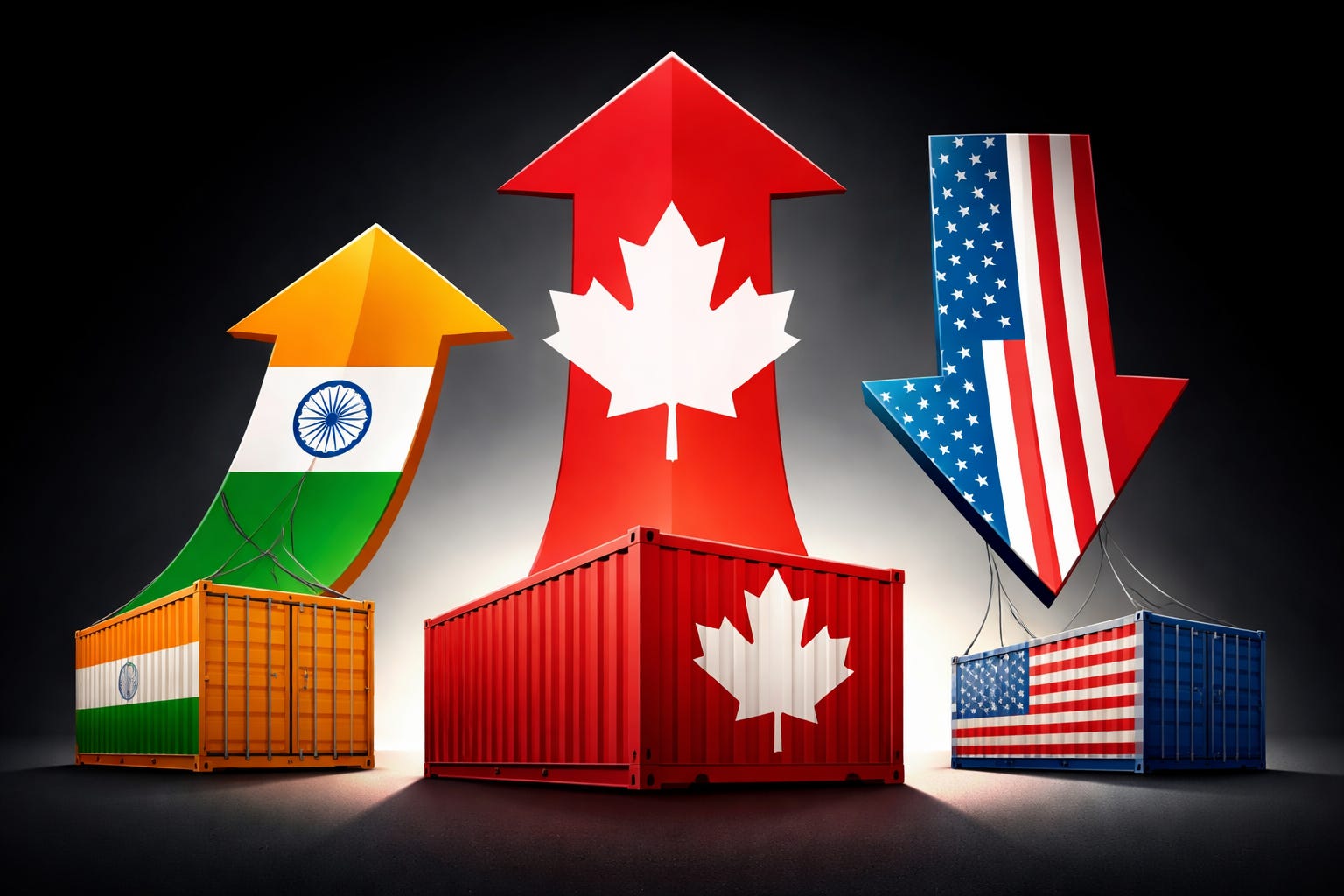
The United States is choosing protection.
Canada is choosing optionality.
Neither path is guaranteed success… but only one increases flexibility.
Tariffs function as taxes on imports, which ultimately raise costs for domestic businesses and consumers. Economists have debated their strategic value for centuries, but sustained high tariffs almost always come with economic trade-offs.
Canada appears to be betting that openness and diversification are the safer long-term strategy.
And if a major agreement with India materializes, that bet could start paying off sooner than many people expect.
Bottom Line
Canada isn’t walking away from the United States.
But it is preparing for a world where the U.S. is no longer the only game in town.
That’s not politics.
That’s risk management.
The Recap…
Canada may be on the verge of a major trade shift… and most people haven’t noticed.
While Washington talks tariffs, Canada is building new partnerships across the Indo-Pacific.
This could reshape our economic future faster than expected.
The Gut-Punch…
When your biggest customer starts adding taxes to everything you sell, you don’t argue… you find new customers.
Source Credit:
Source: BBC, Reuters, CBC, Canadian Press reporting and public economic data.
🔎 The GeezerWise Standard
This space is built on disciplined thinking.
Facts over spin.
Verification before amplification.
Good-faith discussion over tribal noise.
I use AI tools to help shape my spoken drafts into clear writing.
The judgment, conclusions, and final message are mine.
If you’re new here, this explains how I decide what’s worth sharing:
How I Decide What’s Worth Sharing → [link]
💌 Subscribe at GeezerWise.com to receive future letters:
www.geezerwise.com/subscribe
— Fred Ferguson
GeezerWise
#CanadaStrong