

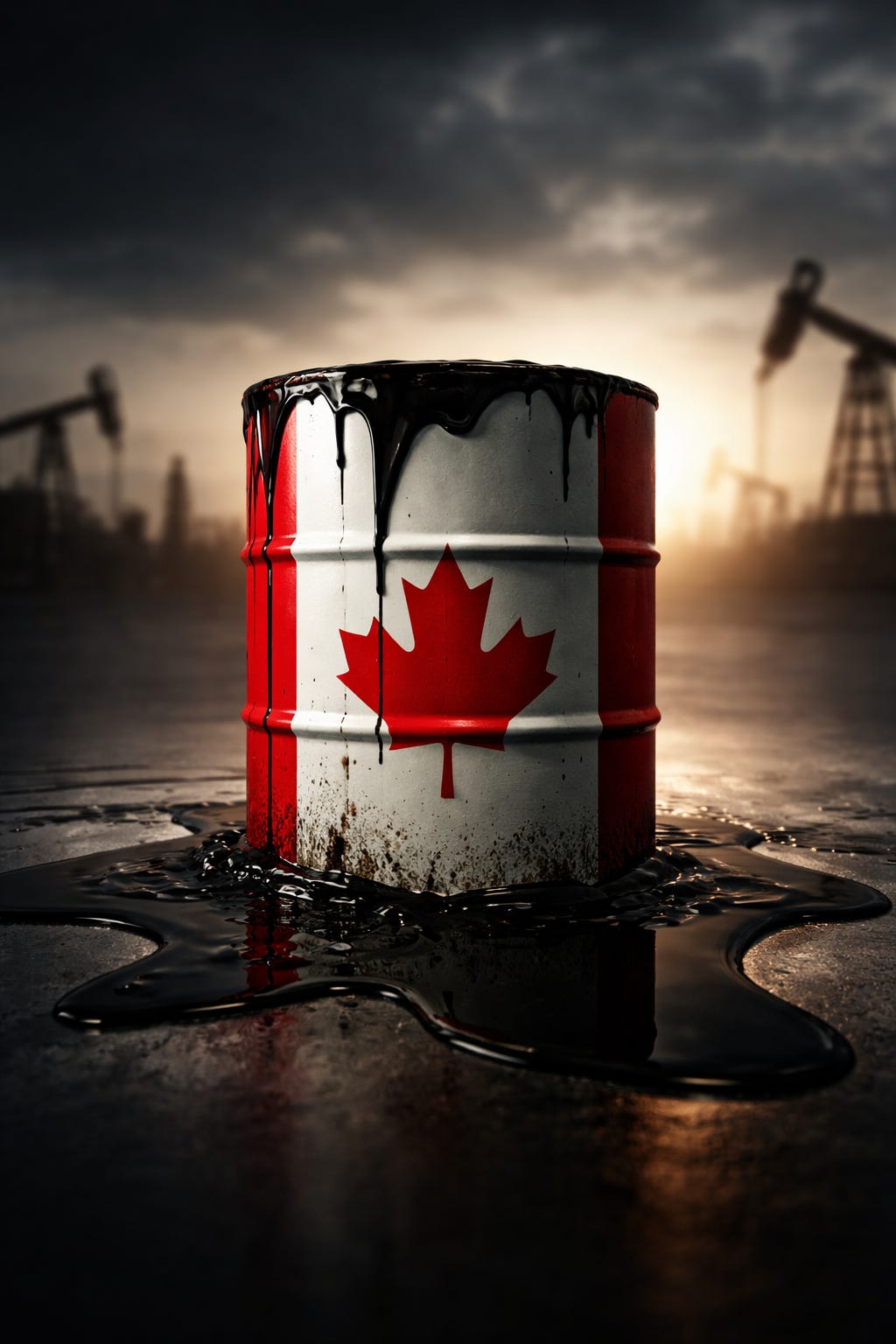
There’s a simple question buried under all the noise right now…
Why would a country sitting on massive oil production… start stockpiling oil like it’s running out?
That’s the idea being floated… and it sounds reasonable on the surface. Build a “strategic reserve,” be prepared for crises, help allies if things go sideways.
Except… that logic only works if you don’t understand the difference between an oil importer and an oil exporter.
And Canada isn’t short on oil.
Not even close.
Let’s start with what actually triggered this conversation.
Mark Carney announced a temporary suspension of federal fuel taxes… about 10 cents per litre on gasoline and 4 cents on diesel.
That’s short-term relief. Fine.
But the bigger issue… the one people actually care about… is this:
Are gas prices going up or down?
And the honest answer?
Nobody knows.
Because global oil prices aren’t set in Ottawa.
They’re set by geopolitical pressure points… and right now, the big one is the Strait of Hormuz.
Roughly 20% of the world’s oil supply moves through that narrow strip of water.
When conflict flares up in that region, supply gets squeezed… and prices spike.
That’s exactly what’s happening.
So yes… fuel prices are likely to stay high.
But here’s where things go sideways.
The “Strategic Reserve” Idea
Pierre Poilievre has been pushing the idea that Canada should build a strategic oil reserve… similar to what the U.S. and Europe maintain.
Sounds responsible, right?
Until you look at who those reserves are actually for.
Countries like…
Japan
Germany
France
Italy
The U.K.
All have large oil stockpiles.
Not because they’re rich in oil…
But because they don’t have any.
They’re net importers… completely dependent on foreign supply.
If shipments stop, their economies stall.
So they store oil as insurance.
Makes sense.
Now look at Canada.
We export close to 5 million barrels of oil per day.
Let that sink in.
Every single day, we’re already supplying the world.
That flow… that constant output… is our reserve.
We don’t need to store oil in giant underground caverns…
Because we’re pulling it out of the ground in real time.
Here’s the Part Nobody Talks About
Building a strategic reserve isn’t just about digging a hole and filling it with oil.
It means…
Governments buying oil (with taxpayer money)
Storing massive volumes (hundreds of millions of barrels)
Maintaining infrastructure
Managing release timing
In the U.S., that reserve holds around 400+ million barrels.
Sounds impressive.
But that’s only about 10–15 days of national consumption.
That’s it.
So ask yourself this…
Why would Canada spend billions buying oil…
that we already produce…
just to store it…
for a couple weeks of backup?
And Then There’s the Logistics Problem
Let’s say we do build this reserve.
Now what?
How do we move that oil in a crisis?
Because here’s the inconvenient truth…
Canada doesn’t currently have the pipeline and export capacity to rapidly increase shipments when demand spikes.
So now you’re not just building a reserve…
You’re talking about…
New pipelines
New export infrastructure
More billions in cost
All for a system we don’t actually need.
The Real Difference (This Is the Key)
Here’s the entire debate in one clean line…
Importers need reserves because they rely on others.
Exporters don’t — because they are the supply.
Canada is the supply.
That’s the whole story.
So Why Push This Idea?
Because it sounds strategic.
Because it plays well politically.
And because most people don’t sit around thinking about global oil logistics.
But once you strip away the talking points…
You’re left with a simple reality…
Canada doesn’t lack oil.
It lacks clarity in the conversation.
Back to the Question Everyone Actually Cares About
Will gas prices be lower this summer?
Maybe.
Maybe not.
Depends on global supply, conflict zones, and how stable that 20% flow through the Strait of Hormuz really is.
That’s the part nobody controls.
The Bottom Line
Canada isn’t vulnerable because it lacks a stockpile.
It’s vulnerable because it’s tied to a global market it doesn’t control.
And no amount of oil sitting in storage fixes that.
The Recap…
Gas prices aren’t decided in Canada… they’re shaped by global conflict and supply routes.
Strategic reserves sound smart… but they’re built for countries that don’t produce oil.
Canada already exports millions of barrels a day… that’s its real leverage.
Building a reserve here? Expensive… redundant… and mostly political theatre.
The Gut-Punch…
You don’t fix a global supply problem by stockpiling what you already have…
you fix it by understanding your role in the system.
Source credit:
Analysis based on global oil trade data, G7 reserve structures, and current geopolitical developments involving the Strait of Hormuz.
🔎 The GeezerWise Standard
This space is built on disciplined thinking.
Facts over spin.
Verification before amplification.
Good-faith discussion over tribal noise.
I use AI tools to help shape my spoken drafts into clear writing.
The judgment, conclusions, and final message are mine.
If you’re new here, this explains how I decide what’s worth sharing:
How I Decide What’s Worth Sharing → [link]
💌 Subscribe at GeezerWise.com to receive future letters:
www.geezerwise.com/subscribe
— Fred Ferguson
GeezerWise
#CanadaStrong
I hadn’t heard that PP was talking about having an oil reserve.
He seems to latch onto many ideas that sound good but are easily found to be implausible
Perhaps before beaking-off before a camera, Mr. (Challenges the Prime Minister's education) Poilievre could spend a couple of minutes researching his subject matter. Small wonder he quakes in the presence of a world renowned economist with a PhD. Resource leverage applies to many natural materials.