

For years, Canada’s defence procurement strategy could be summarized in one sentence…
Buy American if possible. Explain the cost later.
That pattern may be ending.
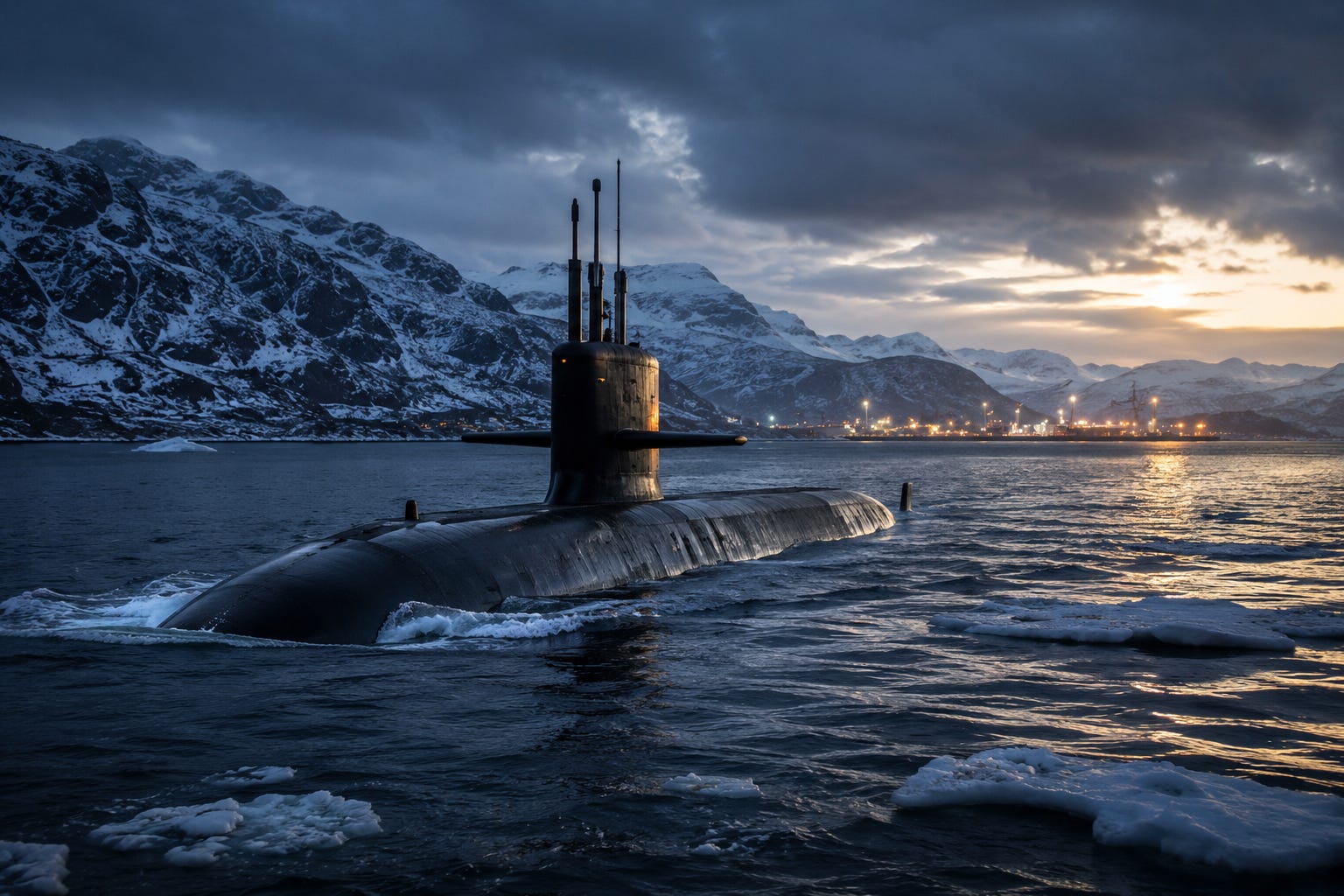
The federal government has selected Germany’s submarine builder, TKMS, to supply a new fleet of 12 submarines in a deal that could ultimately approach $100 billion when construction, maintenance, upgrades, training, and lifecycle costs are included.
On the surface, this is a military story.
Underneath, it’s an economic story.
And underneath that, it’s a sovereignty story.
Because the most important thing Canada may have purchased wasn’t a submarine at all.
It was flexibility.
Why Germany Won
South Korea’s Hanwha Ocean mounted a serious challenge. Both bidders offered modern submarine designs and both promised industrial benefits.
In the end, Canada chose Germany.
The decision comes at a time when Canada and Germany are rapidly deepening their relationship in several areas, including energy, defence cooperation, Arctic security, and industrial development.
Germany recently committed to purchasing Canadian LNG.
Now Canada is committing tens of billions of dollars to German-built submarines.
Coincidence?
Maybe.
But governments rarely spend this kind of money without thinking about the broader relationship.
The Bigger Shift Nobody Is Talking About
The submarine announcement fits into a pattern that’s becoming harder to ignore.
Canada is steadily reducing the number of strategic eggs sitting in the American basket.
Not eliminating them.
Reducing them.
The reality is that Canada remains deeply tied to the United States through NORAD, intelligence sharing, integrated supply chains, and existing military equipment.
We’re still buying F-35 fighter jets.
We’re still linked to North American defence systems.
But we’re no longer acting as though Washington is the only game in town.
That’s a significant change.
When political relationships become unpredictable, diversification becomes insurance.
Businesses understand that.
Countries are starting to relearn it.
The Economic Prize
Supporters of the deal argue this isn’t simply a military expenditure.
It’s an industrial strategy.
Government projections suggest the project could generate as much as $86 billion in economic activity, support roughly 50,000 jobs during the first five years, and create hundreds of thousands of job-years over the life of the program.
Whether those numbers prove accurate remains to be seen.
Governments have a long history of producing optimistic forecasts whenever large spending projects are announced.
Still, one fact is difficult to dismiss…
Maintenance, upgrades, training, and support contracts can last for decades.
If meaningful portions of that work stays in Canada, the economic impact could be substantial.
Shipbuilding yards, ports, aerospace companies, weapons manufacturers, engineering firms, and technology suppliers would all stand to benefit.
That’s a very different outcome than simply writing a cheque and waiting for equipment to arrive.
The Arctic Changes Everything
Twenty years ago, many Canadians viewed Arctic defence as a niche issue.
Today it’s becoming a national priority.
Russia remains active in the North.
China is increasingly interested in Arctic shipping routes and resources.
Climate change is opening waters that were previously inaccessible.
Suddenly, geography matters again.
Submarines are one of the few tools capable of operating effectively in that environment.
They provide surveillance, deterrence, intelligence gathering, and strategic reach in areas where surface ships face limitations.
For a country with the world’s longest coastline and enormous northern territory, that capability isn’t a luxury.
It’s becoming a requirement.
The New NATO Reality
Another factor sits quietly in the background.
NATO is changing.
The alliance is demanding larger commitments, bigger budgets, and deeper industrial cooperation from its members.
Canada has finally reached the long-discussed 2% defence spending target.
Now discussion is already shifting toward 5% by 2035.
That would have sounded absurd a few years ago.
Today it’s being discussed seriously.
If that trajectory continues, the submarine deal may be remembered not as an isolated purchase, but as the opening move in a much larger defence expansion.
The Question Taxpayers Should Ask
Supporters see jobs, industrial growth, Arctic security, and reduced dependence on American suppliers.
Critics see a potential $100-billion commitment arriving at a time when governments are already carrying enormous fiscal burdens.
Both concerns are legitimate.
The real test won’t be the announcement.
It will be execution.
Can Canada actually build the industrial capacity being promised?
Can the jobs materialize?
Can procurement finally happen without years of delays and cost overruns?
That’s where the story will be won or lost.
The Recap…
Canada didn’t just choose Germany to build submarines.
It chose a different direction.
Less dependence on a single partner.
More integration with Europe.
More focus on domestic industrial capacity.
The submarines may be the headline.
The strategy behind them is the real story.
The Gut-Punch…
Countries don’t spend up to $100 billion on submarines because they expect a quieter world.
They spend it because they believe the next few decades will be noisier than the last.
Source Credit:
Research compiled from publicly reported information, government statements, defence procurement discussions, NATO spending commitments, and industry reporting regarding Canada’s submarine replacement program, Germany’s TKMS proposal, and broader Canada-Europe defence cooperation.
If you enjoy thoughtful conversations, Canadian stories, and the occasional smart-ass observation about the world we’re living in, you’re in the right place.
Subscribe free and get new stories, insights, and observations delivered directly to your inbox.
No paywall.
No spam.
No nonsense.
Leave anytime with a single click.
I promise not to take it personally.
Now if we could get out of the f35s purchase that would be good. I like the idea of building the Saab jets here creating jobs and not using the usa software.
Yes it was no coincidence that the submarine deal was announced shortly after the LNG deal with Germany.